
1
Direct oral trial reviewed
A proprietary LNAD+ trial, not a pooled estimate for all NAD+ supplements.
Clinical evidence review | Direct oral NAD+
What happens when people take NAD+ by mouth? A new human trial measured a clear blood response to one proprietary formulation. It did not establish a health or wellbeing benefit.
Higher whole-blood NAD versus placebo at Day 6 in the primary analysis of the oral LNAD+ trial, after five treatment days.
95% CI 41.2 to 65.7% | n = 50 analyzed | Proprietary oral powder | No secondary clinical or wellbeing endpoint survived multiplicity correction. [1]
NMN, NR and NADH trials are not counted as direct oral NAD+ evidence. No Neurogan product-specific benefit was established.
The count describes the verified direct oral study featured here, not an exhaustive claim that no other study exists.
A proprietary LNAD+ trial, not a pooled estimate for all NAD+ supplements.
51 received treatment and supplied a qualifying blood draw; 50 entered the primary analysis.
Final biomarker assessment was on Day 6, one day after the last treatment day.
No clinical, vital-sign, wellbeing or wearable-derived secondary endpoint survived multiplicity correction.
Ingredient research is not product testing. No finished Neurogan NAD+ capsule, liposomal NAD+ or NAD+ with resveratrol trial was identified in these reviewed sources. [1]
Nicotinamide adenine dinucleotide helps transfer electrons during energy metabolism. It also supplies NAD-dependent enzymes involved in DNA maintenance and cellular signaling. These roles explain scientific interest in NAD+.
They do not establish that adding an oral dose improves energy, memory, exercise capacity or lifespan. A molecule being necessary is different from supplementation being beneficial. [1]
Five days of one physicochemically modified oral formulation increased a whole-blood NAD measurement versus placebo. That is a measurable biological response.
Whether that response improves how people feel, function or age remains unresolved. Neither lifespan extension nor prevention of age-related disease was demonstrated. [1]
| Name | What it means | Role on this page |
|---|---|---|
| NAD+ | The oxidized coenzyme itself. | Direct oral supplementation is the subject of this review. |
| LNAD+ | LathMized NAD+, a proprietary formulation that retains the native NAD+ molecular structure. | The specific oral formulation tested in the featured trial. Not synonymous with liposomal NAD+. |
| NMN and NR | Different molecules used in pathways that synthesize NAD+. | Context only. Their trials are not counted as direct NAD+ evidence. |
| NADH | The reduced partner of NAD+ in redox chemistry. | A distinct administered compound. NADH studies are not included as direct NAD+ trials. |
The oral powder and swish-and-swallow protocol differ from swallowing a conventional capsule.
Kornilov and colleagues evaluated LathMized NAD+ in a double-blind, placebo-controlled Phase 0/1b study. Adults were aged 45 to 75. Although described as healthy, some reported conditions such as hypertension; major exclusions included diabetes, current cancer and several inflammatory disorders. [1]
The methods report 2,000 mg per day in four 500 mg doses, spaced approximately 3 to 4 hours apart. On Days 2 and 3, an extra 500 mg nighttime dose was added. The authors describe approximately 22 doses and 11 g cumulative NAD+ over the course.
The paper also describes the powder as 50% NAD+ and 50% polyethylene glycol (PEG). The registry describes a 500 mg total treatment containing a 50/50 mixture, alongside an intervention entry saying NAD+ 500 mg. These descriptions do not fully resolve active NAD+ mass versus total powder mass. The amounts above reproduce the publication's protocol; they are not verified capsule equivalents or instructions for self-dosing. [1, 2]
Of 60 randomized participants, 51 received at least one dose and supplied an on- or post-treatment blood draw. One placebo participant was then excluded from the primary analysis after unblinding because of a substantial NAD decline interpreted as recent B-vitamin discontinuation. The paper reports similar conclusions when that participant was retained. This is still a reason to look for independent replication.
Read the peer-reviewed publication ↗ Read the trial registration ↗
| Measurement | Reported result | Interpretation |
|---|---|---|
| Whole-blood NAD, Day 4 | 38.2% higher versus placebo; 95% CI 29.1 to 48.0%; p = 4.11 × 10⁻¹². | Early biomarker response during dosing. |
| Whole-blood NAD, Day 6 | 53.0% higher; 95% CI 41.2 to 65.7%; p = 5.48 × 10⁻¹⁴; Hedges' g = 3.66. | A large standardized effect on this blood measurement, not proof of a large health benefit. |
| Separated plasma NAD, Day 6 | No significant change; p = 0.60. | The blood compartments did not respond in the same way. |
| Plasma breakdown products | MeNAM and 2PY rose significantly. | Consistent with downstream NAD metabolism, not a direct measure of better health. |
| Clinical, vital-sign, wellbeing and wearable outcomes | No secondary endpoint survived multiplicity correction. | No reliable secondary benefit was demonstrated after accounting for multiple testing. |
Testing many outcomes creates more chances for apparently positive findings by chance. The authors adjusted for multiple testing within outcome families. The clinical and wellbeing results did not remain significant. This does not prove that a longer trial could never find a benefit, but it means this trial did not establish one. [1]
Whole-blood NAD is predominantly a blood-cell measurement, strongly influenced by red blood cells. The paper calls this intracellular NAD, but it is not a direct measurement of NAD in the brain, skeletal muscle or mitochondria.
Plasma is the liquid compartment after cells are removed. The trial found a whole-blood rise without a significant plasma rise. These results are not contradictory, and the compartments should not be combined into a single “body NAD” score. [1]
A higher blood NAD value after dosing shows a biological response to the intervention. It does not by itself trace every swallowed molecule into cells unchanged or quantify what fraction of a dose was absorbed intact.
The authors propose a formulation-specific explanation. Establishing the route of uptake, tissue delivery and superiority over another formulation would require additional direct measurements and comparisons. [1]
Some papers use “NAD+ supplementation” as an umbrella for NR, NMN and other NAD-related interventions. A 2026 systematic review covers preclinical and clinical evidence across this broader field. Its study counts are not a count of direct oral NAD+ trials. [3]
Precursor research helps explain the biological question. It cannot substitute for testing an NAD+ capsule. No precursor trial is plotted, pooled or counted on this page.
Larger, independently replicated trials would need to test prespecified outcomes people can feel or use, such as physical function, with enough treatment and follow-up to detect a meaningful change.
They would also need a clearly characterized formula and active dose. Longer life and fewer age-related diseases require very different evidence from a five-day biomarker study.
Product information is shown to explain differences, not to transfer the trial result to the bottles. Catalog reviewed September 8, 2026.
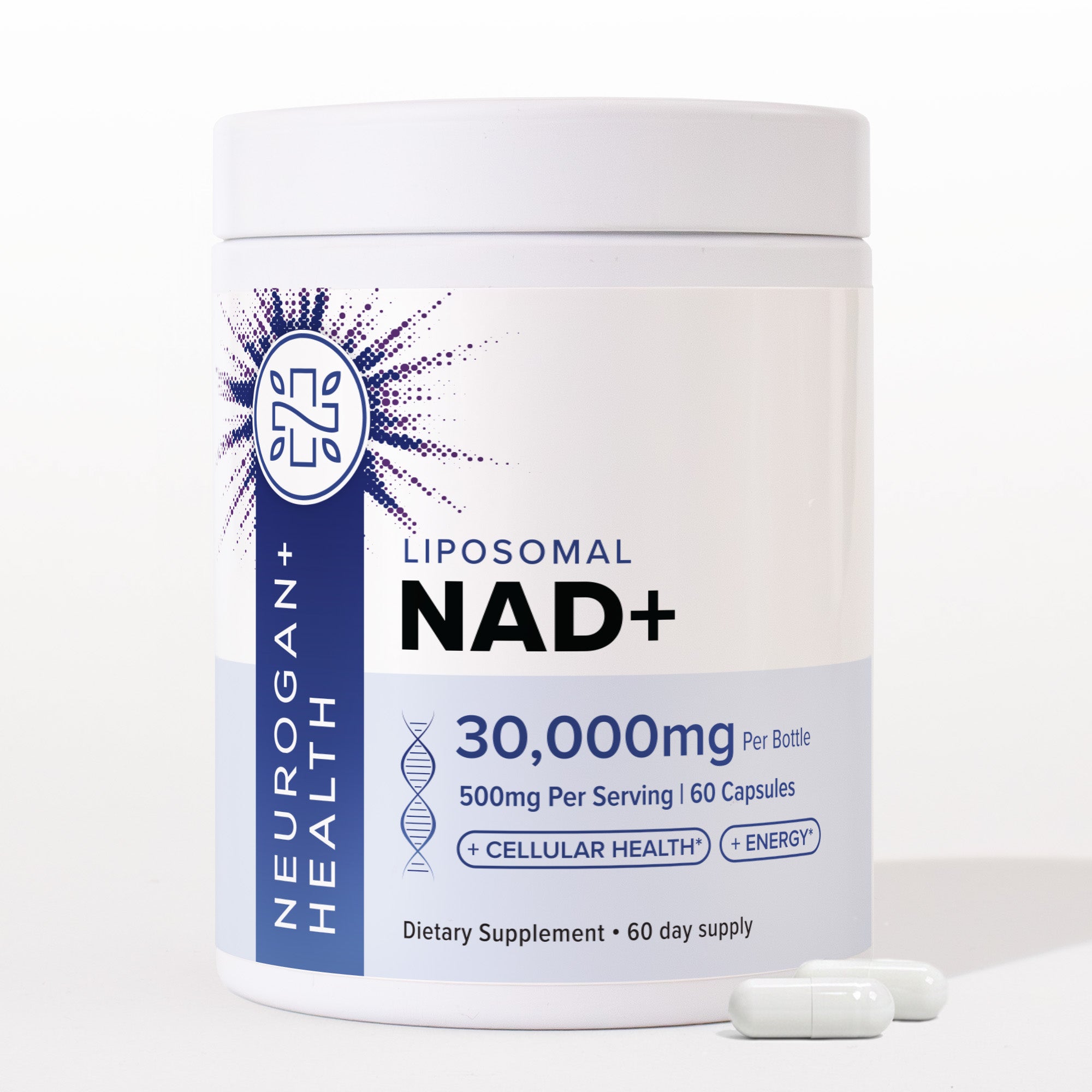 Catalog formulation
500 mg per serving
The catalog describes sunflower lecithin and a liposomal-style delivery system, with 500 mg per serving and suggested use of 1 to 2 capsules. Serving size, active-versus-complex mass, vesicle characteristics and human absorption equivalence are not established here.
No trial of this finished Neurogan product was identified in the reviewed sources.
View product and current label ↗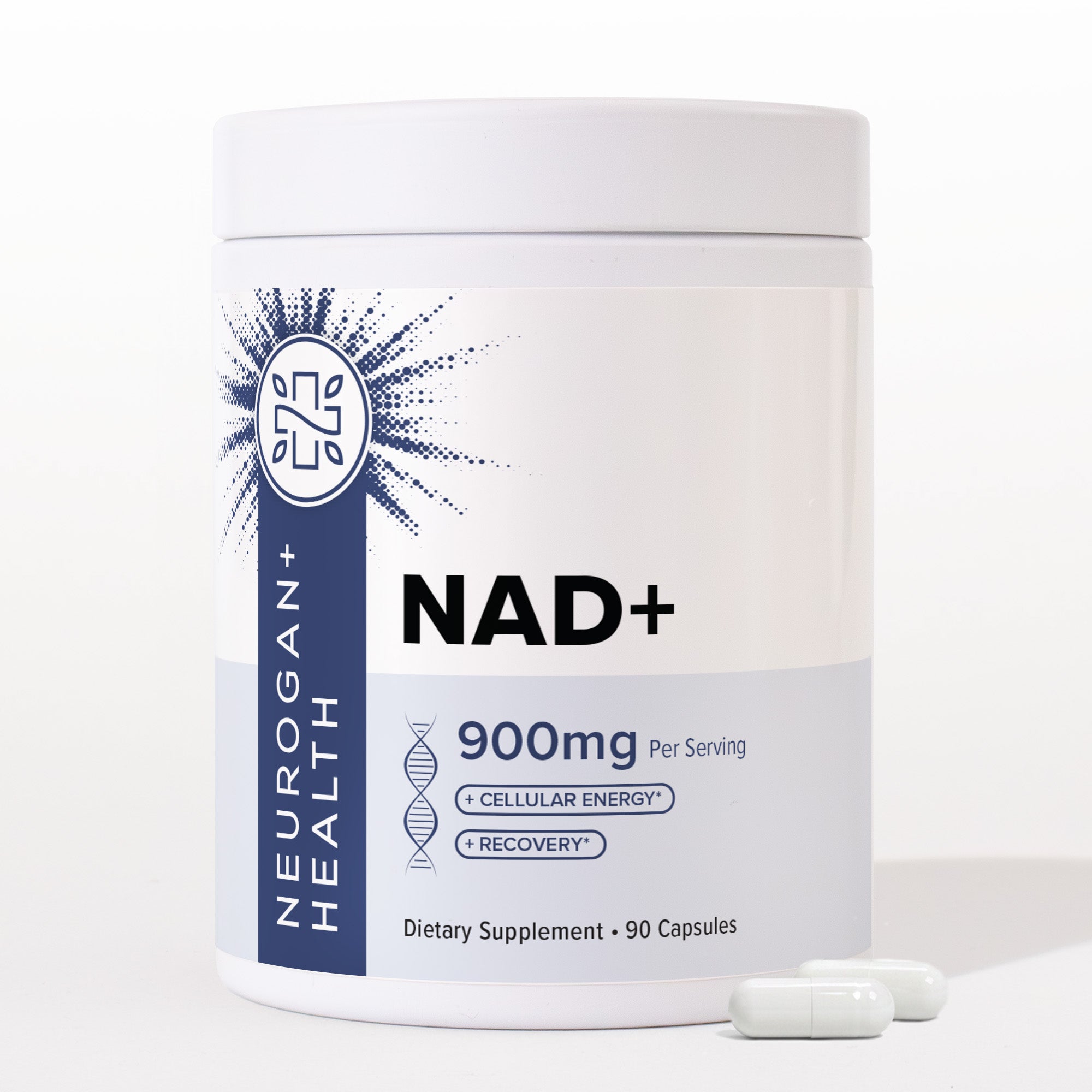 Catalog formulation
900 mg per serving
The catalog states 900 mg per serving and suggests 1 to 2 capsules daily. The serving-to-capsule relationship and active NAD+ assay are not independently label-verified here. This is not the trial formulation.
No trial of this finished Neurogan product was identified in the reviewed sources.
View product and current label ↗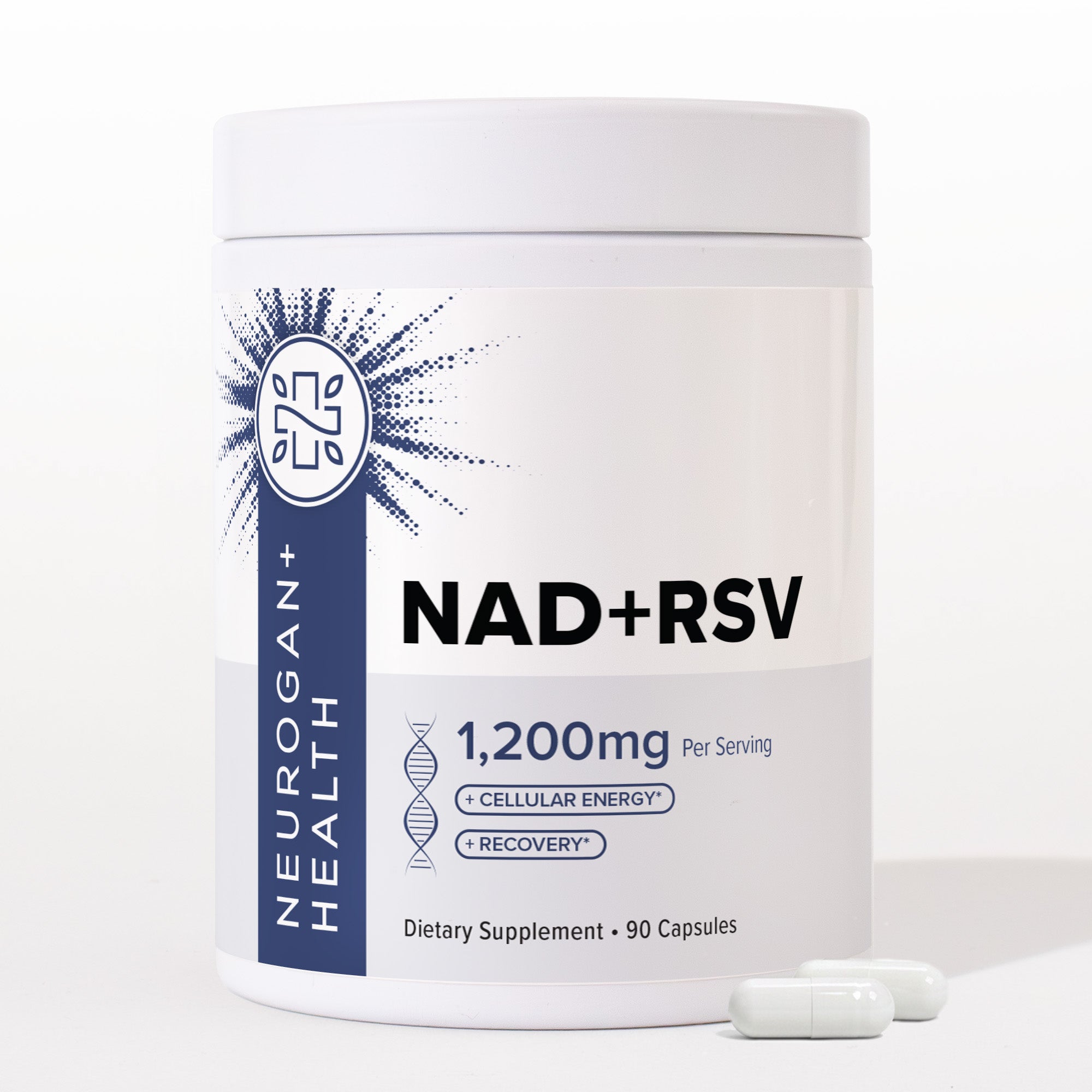 Catalog formulation
1,200 mg combined per serving
The catalog describes a combined 1,200 mg of NAD+ and micronized trans-resveratrol, with suggested use of 2 capsules daily. The individual NAD+ and resveratrol amounts are unresolved. This is not 1,200 mg of NAD+, and a combined benefit has not been demonstrated by this trial.
No trial of this finished Neurogan product was identified in the reviewed sources.
View product and current label ↗Label uncertainty is explicit. Amounts above are catalog statements, not independently verified active-dose recommendations. The oxidized NAD+ identity, salt or hydration form, active assay and serving size matter. Lecithin alone does not demonstrate intact liposomes, intestinal protection, cellular delivery or superior human absorption. Adding resveratrol does not establish synergy. [1, 4 to 6]
The LNAD+ arm had one mild Grade 1 nausea event. Overall symptom incidence was comparable between groups (p = 0.68). No corrected clinical safety-laboratory signal was reported. [1]
A small, short study can miss uncommon adverse effects, cumulative effects and problems in people excluded from participation. Its tolerability findings do not establish indefinite safety for conventional or liposomal capsules.
The study does not establish safety for children, pregnancy or breastfeeding, or for people with major illnesses excluded by the protocol. Medication interactions and long-term use remain insufficiently characterized for these formulations.
Discuss supplement use with a qualified clinician, especially when pregnant, breastfeeding, taking prescription medicines or receiving treatment for a medical condition. Being a molecule the body makes is not a guarantee that an added dose is risk-free.
BioNADRx Holdings, doing business as Bryleos, sponsored and funded the trial; the paper discloses commercial affiliations. This does not invalidate the measurements, but independent replication matters. [1]
LNAD+ is a proprietary physicochemically modified oral powder. This was not a head-to-head study against standard NAD+, a liposomal capsule, NR, NMN or a NAD+ and resveratrol blend. There is no basis here to rank those products by absorption or benefit.
No. A whole-blood biomarker increased with a specific oral powder. The trial did not establish a corrected wellbeing or clinical benefit, and did not test the catalog capsules.
No. The paper describes a physicochemically modulated formulation that changes supramolecular organization and solution behavior while preserving the native NAD+ molecule. Its PEG-containing powder is not evidence that a sunflower-lecithin liposomal product performs the same way.
No. It is a model-estimated relative difference versus placebo in whole-blood NAD at Day 6. It does not describe every cell, absorption percentage, energy improvement or lifespan.
Not reliably. The short research schedule, swish-and-swallow delivery, proprietary formulation and active-versus-powder reporting ambiguity differ from routine capsule use. A biomarker trial does not establish an optimal long-term dose.
This page concerns direct oral NAD+. NMN and NR are precursors and NADH is a different administered form. Non-oral research does not establish oral capsule outcomes. Keeping these categories separate prevents an inflated evidence count.
DOI: 10.1007/s11357-026-02399-1 · PMID 42530810 · Publisher full-text PDF
Methods: study design, intervention, blood collection and analysis sets. Results: primary endpoints, clinical and wellbeing outcomes. Funding and disclosures. The journal article, rather than the earlier preprint, supplies the plotted numbers.
Useful for the planned intervention and eligibility criteria. Registry treatment-mass wording and the publication's active-dose wording are not fully aligned.
PMID 41655607 · DOI: 10.1016/j.arr.2026.103057
Includes NAD-related interventions and precursor research. Not direct oral NAD+ efficacy evidence and not included in the direct-trial count.
Direct human oral NAD+ research was distinguished from precursor, NADH and non-oral interventions. The featured study was checked against its publisher full text and trial registry. The broader review is included only to explain terminology, and product descriptions are not treated as clinical evidence.
This is a focused evidence review, not a systematic review or a personalized medical recommendation. One publication and its registry describe one trial. Evidence and catalog information reviewed September 8, 2026.
Download study data (JSON) · Download formulation notes (JSON)